
Kitchen Garden Magazine’s Ben Vanheems shares some essential tasks to carry out in your garden and allotment for May.
What to sow outdoors in May
- Beans & Peas: French beans, peas, runner beans
- Roots: Beetroot, carrots, onions, parsnips, turnips
- Squashes: Pumpkins, courgettes, squashes, cucumber
- Brassicas: Brussels sprouts, cabbage, cauliflower, kohl rabi, lettuce, sprouting broccoli
- Salad & leafy greens: Kale, radish, salad leaves, spinach, spring onions, Swiss chard
- Herbs: Basil, borage, chives, dill, mint, parsley, rosemary, sage, thyme
- Others: Chillies, peppers, sweetcorn
What to sow indoors/under cover in May:
Aubergine, beans, chillies, courgettes, lettuce, melons, pepper, sweetcorn, squashes
What to plant out in May
Aubergine, Brussels sprouts, cabbage, cauliflower, celeriac, celery, chillies, courgettes and marrows, Florence fennel, globe artichoke, kohl rabi, leeks, lettuce, peas, peppers, potatoes, squash and pumpkins, sprouting broccoli, strawberries, sweetcorn, tomatoes
Enjoy more Kitchen Garden Magazine reading.
Click here to subscribe & save.
What can I harvest in May?
Asparagus, cabbage, globe artichoke, lettuce, radish, rhubarb, salad leaves, spinach, spring onion
What jobs do I need to do in my fruit & vegetable garden in May?
Cleaning up:
Clear winter crops
Overwintered crops like chard, leeks and hardy salads will want to flower with the increasing day length. Clear away the last of this winter veg to make way for new plantings.
Hoe weeds
Make a vow to keep on top of weeds so they don’t get out of hand and overwhelm you. Hoe and hand weed regularly, nipping out weeds while they are still young.
Harden off tender plants
From the second half of May it’s time to begin planting half-hardy (frost tender) crops like tomatoes, courgettes, and French and runner beans, starting with gardens in the south and ending, around early June, with more northerly veg plots.
Before planting any plant started off under cover, it must first be hardened off. This is the process of acclimatising plants to the outdoor environment, so that tender growth literally hardens up to withstand the cooler conditions.
Move plants from the greenhouse or indoors into a cold frame, closing the lid at night to keep the chill off. If you don’t have a greenhouse, position plants in a sheltered spot and cover with horticultural fleece at night. Gradually increase the time plants go unprotected until all danger of frost has passed.
Earth up potatoes
Potato tubers turn green when exposed to light, so draw up the soil around plants to keep developing potatoes covered. Do this in stages until the foliage above closes over.
Protect carrots
It’s peak time for carrot root flies. The low-flying females lay their eggs at the neck of roots at soil level. Erect barriers or cover carrots with fleece to keep them off.
Plant Brussel sprouts
Transplant Brussels sprouts started off in separate beds or pots. Plant them once they reach 10-15cm (4-6in) in height and have several adult leaves. They need a sunny spot and protection from strong winds. Plant into soil prepared with plenty of organic matter and a slow-release organic fertiliser, spacing plants about 60cm (2ft) apart in both directions. Firm the soil back in around transplants to give plenty of support then water well to settle. Gradually drawing soil up around the base of stems will offer plants further support but consider tying stems to stakes if they do wobble in the wind.
Support beans: Three options
- TEPEE: The classic way to support climbing beans. Tepees look stunning and offer an advantage on more exposed sites as their conical shape helps deflect wind. Use six to eight canes tied together at the top. Use a dustbin lid as a guide to fan canes out in a perfect circle.
- V-FRAME: A twist on the more common A-shaped frame. In this case the canes taper outwards, attached to a rectangular frame at the top supported on uprights. In this way the beans hang out, away from their supports, making them easier to spot and pick.
- ARCHWAY: Make a feature out of your beans (or any climbing vegetable) by growing them over an arch. This one’s made from two lengths of wire mesh secured to six galvanised fence posts – three on each side – using cable ties. After use it can easily be dismantled.
Pests & Problems to watch out for in May
- BLACKFLY: The black bean aphid affects crops like spinach, globe artichoke and, of course, beans. Check often for outbreaks and squish small clusters. Pinch out the tips of broad beans to reduce the risk of an attack. Ladybirds often move in to take care of infestations.
- FLEA BEETLE: These tiny black beetles ping away from crops when disturbed. Found on brassicas like radish and rocket, they chew tiny holes in the leaves, causing a lacy pattern. Water well to keep crops healthy and cover susceptible plants with fleece or insect mesh.
- ASPARAGUS BEETLE: Asparagus beetles are very distinctive with their creamy spots and red thorax. They damage asparagus by chewing notches into the spears so that they grow crooked. Pick off beetles and their larvae and dispose of them in a bucket of water.
- CARROT ROOT FLY: It’s peak time for carrot root flies. The low-flying females lay their eggs at the neck of roots at soil level. Erect barriers or cover carrots with fleece to keep them off.
Jobs for in the greenhouse/ under cover in May
Apply shading
Things are hotting up (hopefully!) and more sunshine means more heat stress. Apply some shade paint to offer some protection from the harshest rays of strong summer sun. Shade netting and blinds (ideally external) are other options to keep things cooler.
Open vents
Temperatures in the high 20s and beyond can damage plants, resulting in scorching, drying of tender growth and even collapse of young seedlings. Use a max-min thermometer to monitor daily highs. Open vents and leave the door open if it’s hot. Automatic vents make things easier.
Damp down
Higher humidity helps to protect against heat damage. This is easily achieved through damping down: wetting hard surfaces like paving slabs with water, which then evaporates. Do this regularly – a few times a day if possible. Humid air also deters red spider mites.
Pot up plug plants
Pot up plugs of crops like peppers and tomatoes as soon as they arrive so growth isn’t interrupted. Inspect for signs of pests or diseases then isolate plants for a few days to make sure any problems that aren’t immediately obvious don’t get transferred to healthy plants.
Sow sweetcorn
Sweetcorn is at its sweetest and most delicious moments after picking, which makes it well worth growing. Start sweetcorn off in late April or early May by sowing seeds into their own pots or large module trays. To encourage extensive roots use deep Rootrainers or improvise with loo roll tubes, packed into a seed tray to hold them together so they don’t fall apart. Plant out later in May in a block formation to encourage successful wind pollination.
Start beans
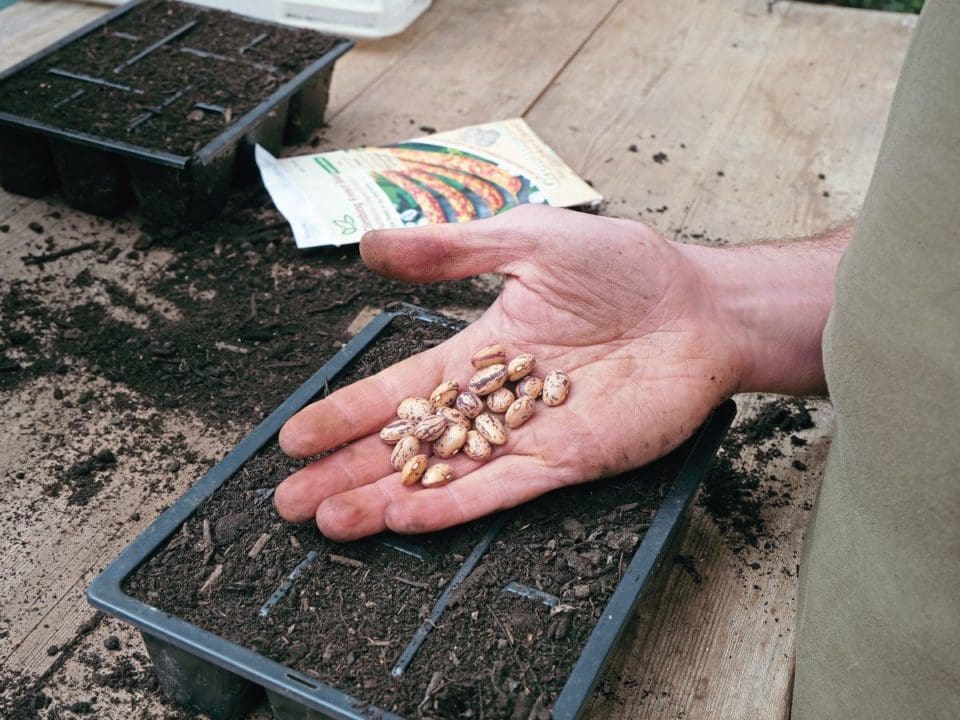
French and runner beans are summer staples, and now’s your cue to sow them! Sowing in the greenhouse gives a far more predictable outcome, as well as stealing a head start on direct-sown beans. Sow as for sweetcorn – one seed per pot or module – and grow on under cover till it’s warm enough to plant them outside. Don’t forget to include some beans for drying to use in winter stews and casseroles: borlotti beans like ‘Lingua di Fuoco’ and runner bean ‘Czar’ (a delicious butter bean) make superb choices, with some picked for eating fresh and the remainder left to mature and dry.
Planter tip: grow in straw bales
Greenhouse crops may be planted directly into greenhouse borders, into large containers of compost or growbags. When using growbags, invest in good-quality, well-filled bags and plant into bottomless pots or plant halos pushed into the bags to offer more support at the roots. They will also make watering a lot easier, as the moisture can run through the pot and down into the bag rather than running straight off over the surface.
Another option – and a decidedly quirky one – is to plant into straw bales. Bales can be picked up for around £5 and last for up to two seasons. Condition bales before planting to kick-start their decomposition, so roots have composted material to grow into.
To condition a bale, sprinkle a cup of nitrogen fertiliser over the top of it every other day. Bloodmeal makes a good organic option. Thoroughly water the bales every day to wash the fertiliser in and to keep the straw moist. Continue like this for nine days in total then finish on day 10 with a balanced organic fertiliser. Bales should be ready to plant after a further week.
- STEP 1: Lay the bales on to plastic sheeting to help retain some of the moisture when you water. Arrange bales so the cut ends of the straw face up, which makes planting them easier. Condition the bales and push in bamboo canes for plants that need supporting.
- STEP 2: Dig out straw with a hand fork to make suitable-sized planting holes. Plant in the same way as you would in a container of compost: set the plant into the hole and back fill with a little more compost to help the roots settle in and grow out into the straw.
- STEP 3: Standard bales fit about three tomato plants. Bank the excavated straw around the base of the plants to help support them. Tie them into their supports and water and feed as normal, using a liquid tomato feed once they begin to flower. Peppers and cucumbers do well in bales.