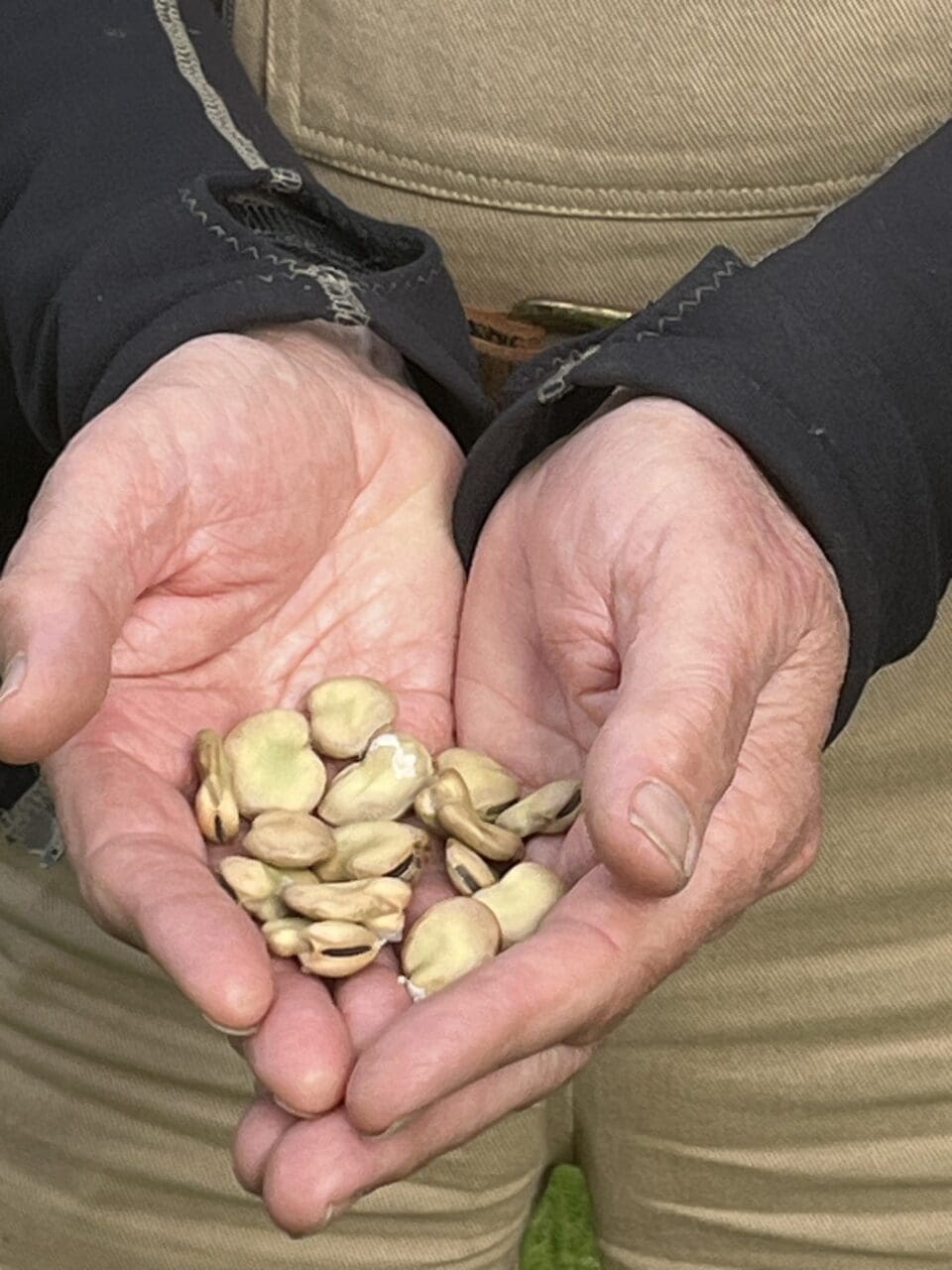
A heritage broad bean with a history that spans 100 years, two continents, three cities, and three gardens, will soon be available for gardeners to grow in their own veg plots.
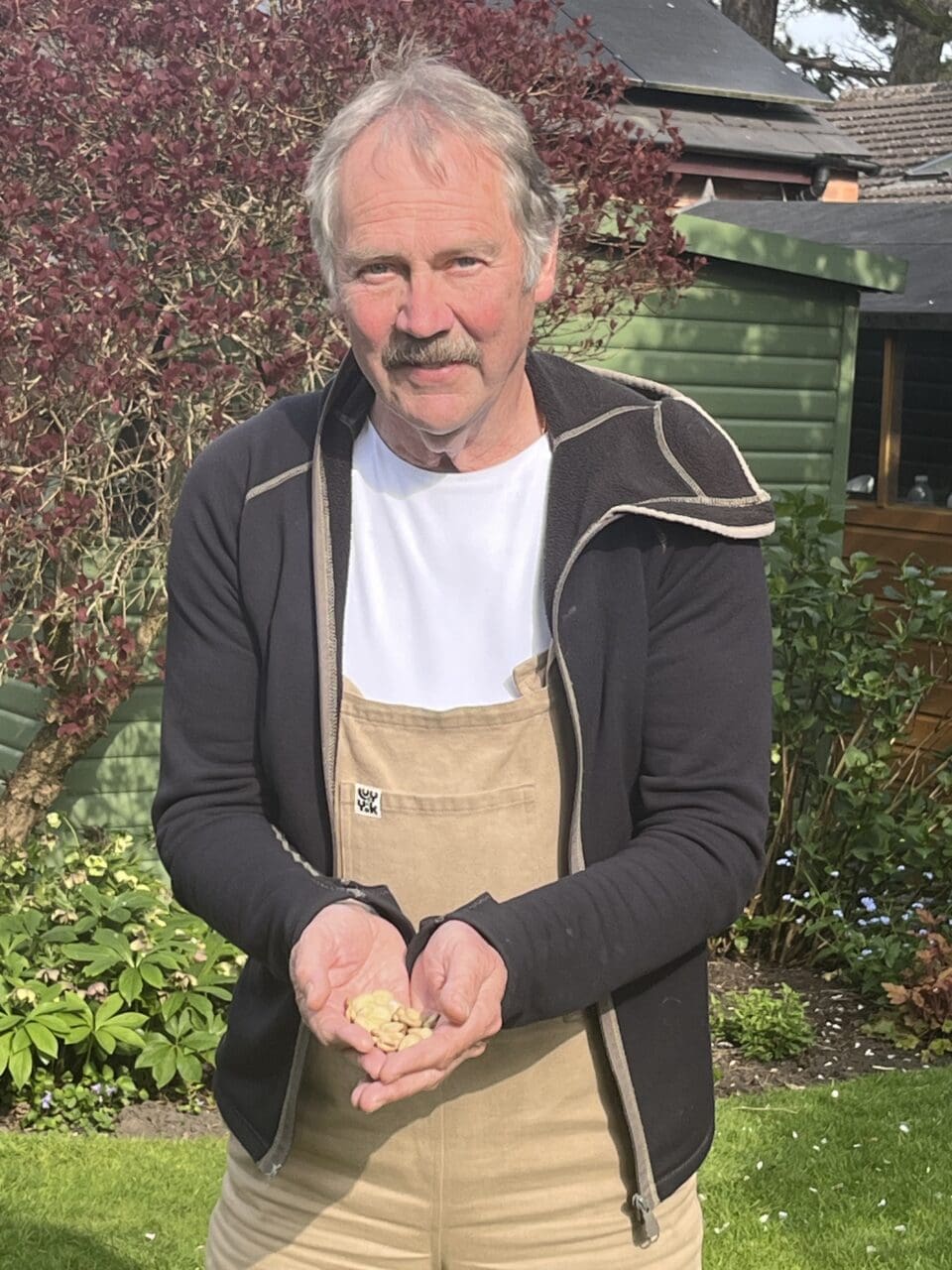
Steve and Gill Bullock have followed in the footsteps of four generations of their family by nurturing Uncle Maurice’s broad beans in their vegetable plot in Lichfield. Now, thanks to the Heritage Seed Library, the special family heirloom could be available for other gardeners to grow.
As part of a National Lottery Heritage Fund two-year ‘Sowing your Seeds’ project, the green-fingered couple have passed the precious beans on to the Library’s National Collection of Heritage Vegetables, based at Garden Organic, near Coventry. The bean will be grown on, saved and safeguarded for future generations.
Enjoy more Kitchen Garden Magazine reading.
Click here to subscribe & save.
The broad beans are named after Gill’s uncle Maurice, whose father Andy was a First World War veteran. In the 1930s, Andy was working as a maintenance man for the Nielsen family at Kiora House, in Norton on Tees, and became friendly with the gardener. He gave Andy a parcel of broad bean seeds that he’d been growing since the early 1920s.
After the death of his father, Maurice continued to grow the broad beans in his garden in Norton-on-Tees and, despite emigrating to Canada in the 1970s, continued to grow and save the beans year-after-year. His daughter Judith also raised Uncle Maurice’s beans, and 20 years ago Steve and Gill inherited their own packet of the precious family heirloom.
“We were chuffed to bits to be trusted with Maurice’s legacy, and continue this little bit of horticultural history,” says Steve, who has grown heritage varieties and been a member of Garden Organic for more than 40 years. “It was a bit of a responsibility, of course, but we felt proud we could carry on the family tradition that has spanned more than 100 years.”
Growing a horticultural heirloom
The couple grow the beans in a vegetable plot at the bottom of their garden, planting in spring for a summer harvest. For 40 years, cultivation of the bean has mostly been plain sailing, but last year Steve was worried they would die out due to drought conditions.
“The strange weather meant we were inundated with black fly and there were hardly any green leaves to be seen,” he says. “Normally, blasting them with a high-pressure hose gets rid of them but that couldn’t happen while we were away!”
Steve and Gill say they love to grow unusual vegetables they can’t buy in the shops. “It’s much more interesting growing these genetically diverse seeds that help to widen the gene pool of our plants,” says Steve. “I think they also taste better than the bland varieties you get in the shops.
“It’s fantastic to be able to pass them on to the Heritage Seed Library so other gardeners, in different parts of the UK, can continue to grow and enjoy them for years to come.”
Catrina Fenton, head of the Heritage Seed Library, said: “We are thrilled Steve and Gill wanted to share this bean with its wonderful backstory as part of our #SeedSearch. It is always a joy to hold the seed and a privilege to be part of conserving Maurice’s legacy. The cultivated biodiversity secured and shared by the Heritage Seed Library is a real testament to those, like Maurice and his family, who have carefully grown and saved seed from valued plants.”
Like to take part in the Heritage Seed Library’s #SeedSearch?
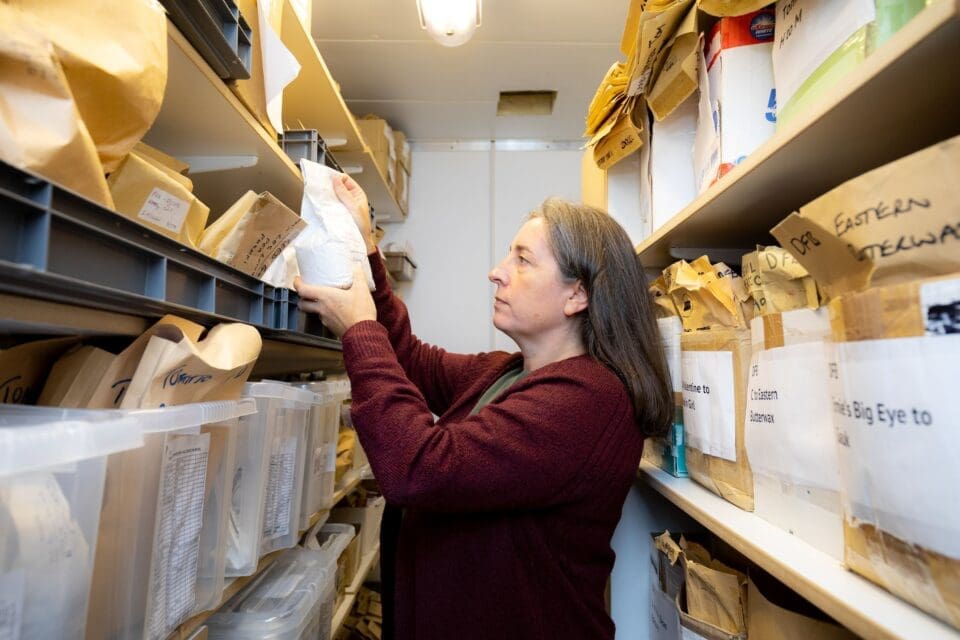
Do you have Ray’s butter bean, Grandpa’s Cress or Mrs Taylor’s Red Pear hiding in your garden shed or greenhouse? If you live in the Midlands, you can become part of the #SeedSearch project.
Supported with a grant from The National Lottery Heritage Fund – and made possible thanks to National Lottery players – the project is asking people in central England to share special heritage seeds and stories to safeguard them for the future. Protecting local, heritage seeds helps preserve history, knowledge and skills, increases resilience through diversity and gets seed varieties back in use.
Head to: gardenorganic.org.uk/seed-search to find our more.