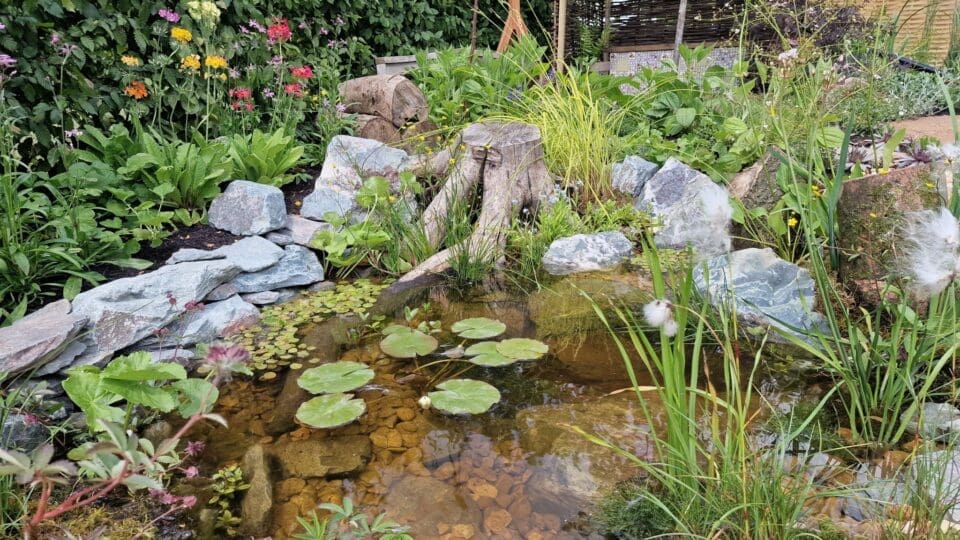
Sustainable gardening charity Garden Organic has won a ‘Silver Merit’ award in the Showcase Garden category for its Ecotalk ‘Rooted in Nature’ Garden at BBC Gardeners’ World Live show at the Birmingham NEC.
The judges commended the garden for being ‘packed full of wildlife habitats and ways to help nature thrive alongside inspiring ways to grow your own food’.
The garden, sponsored by green mobile network Ecotalk, shows how a diversely-planted kitchen gardens which attracts wildlife and can withstand drought and flooding can help to buffer the biodiversity crisis.
Enjoy more Kitchen Garden Magazine reading.
Click here to subscribe & save.
“We’re delighted to have won a ‘silver merit’ award and have had some really positive feedback about the garden and its theme of food growing and nature” says Emma O’Neill, Head Gardener at Garden Organic. “Our garden was all about showing people what’s possible in their own small gardens. Even if you’re growing veg, we show how there’s still plenty of room for flowers and habitats for all kinds of wildlife. And as you nurture them, they will nurture your crops and soil health”.
Emma shares take-away ideas from her Ecotalk ‘Rooted in Nature’ show garden that you can implement in your own garden.
1. Mix flowers with your veg for natural ‘pest’ control
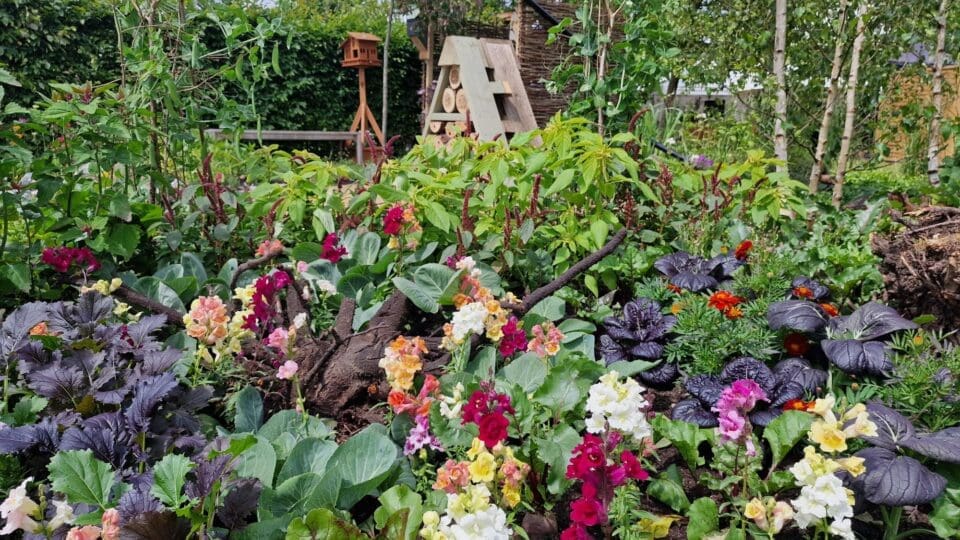
An attractive way to bring in vital pollinators while reducing the need for pesticides, is to combine rows or containers of vegetables with flowers. Central to our show garden was a vegetable patch, packed with diverse heritage vegetables from our Heritage Seed Library intermingled with companion flowers such as snapdragons, marigold, nigella and herbs.
Have a go at using these combinations in your own growing space:
- Calendula and cabbage. Insects such as hoverflies and ladybirds will be attracted to the Calendula flowers and act as predators to the brassica-loving cabbage white caterpillar!
- Nasturtiums and beans. Juicy nasturtium leaves and their brightly coloured flowers pull blackfly away from your beans.
- Crimson clover and fruit bushes. Grow strips of this green manure between fruit bushes to attract insects and also add nutrients. If mown regularly, the cuttings can be thrown under the bushes, where the nitrogen-rich leaves break down quickly to supply nutrients to the trees.
2. Fill your garden with holes, hotels and hideaways
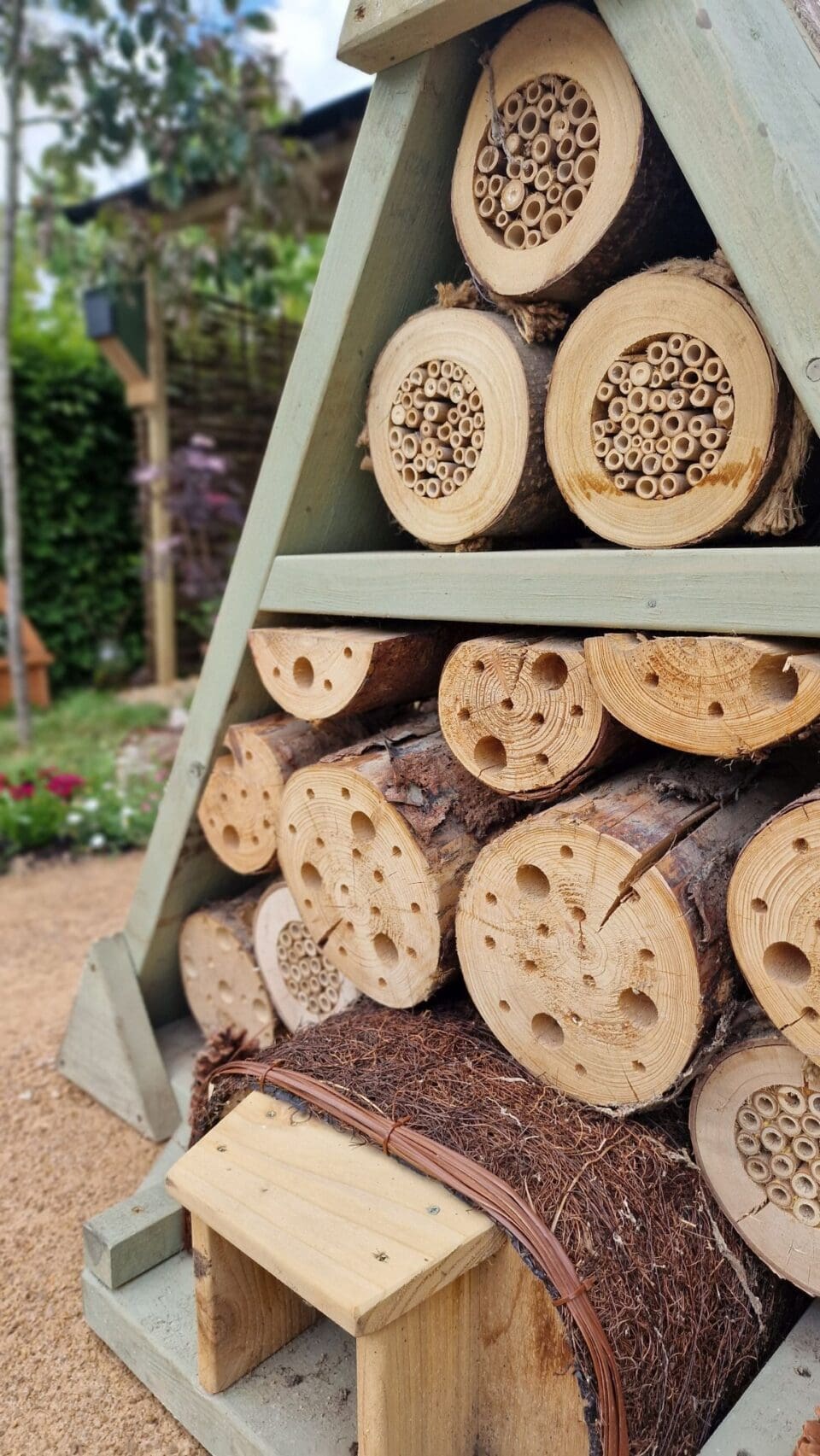
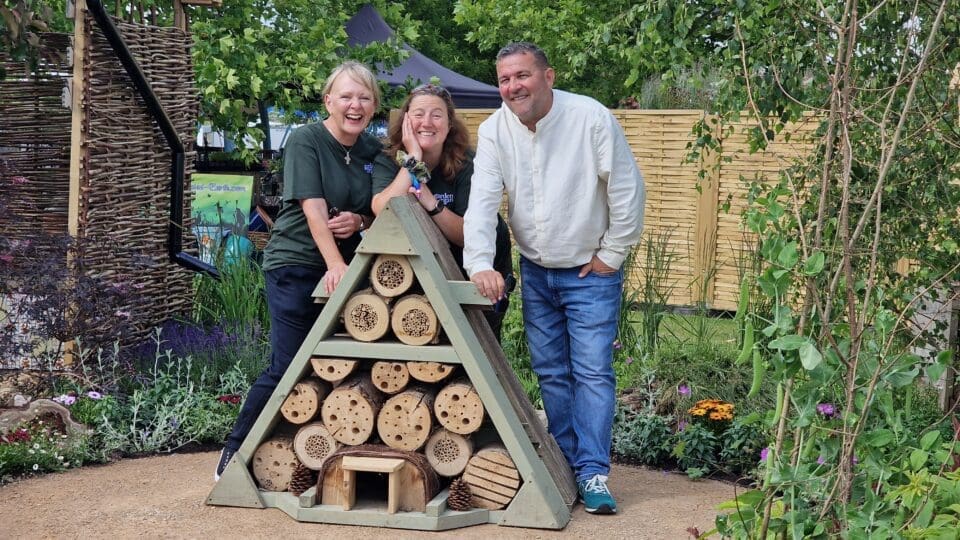
Insect habitats were a key feature of our Ecotalk Rooted in Nature garden. Some of our clever bug-friendly elements include rot holes, hoverfly lagoons and a hibernaculum.
Here’s how to make a hoverfly lagoon:
- Some species of hoverfly like to lay eggs in stagnant water, which is rich in organic matter. The larvae breathe through snorkel-like breathing tubes and eat microbes in the water before hatching into adults after four weeks.
- Find a small to medium pot without drainage holes – you could get children to decorate it – and half fill with water.
- Add dead leaves and some garden soil. Place a few twigs inside, with the ends sticking out so the hoverfly larvae can climb out.
- Sink into the ground near your plants.
3. Dip into forest gardening
Forest gardening is all about food production systems that are intended to emulate what happens naturally in a woodland system. A typical example would be:
- A large fruit tree at canopy level.
- Below this a smaller tree, possibly a fruit tree on dwarfing stock.
- Further down shrubs such as currants – also called the ‘understorey’.
- Then an herbaceous level, for example rhubarb, and ground cover plants such as strawberries.
- Finally, there would be roots and some vertical planting such as a vine.
The plants are diverse and productive or useful (medicinal, good for pollinators, etc). And in our ‘Rooted in Nature’ garden we showcased growing edibles under trees in a nod to this system.
As our garden was based around nature and food, we chose silver birch trees as they support a wide array of UK native wildlife. Our understorey was currants, the herbaceous level chives and our ground cover strawberries. It’s a great way of demonstrating just how many edibles can be grown in a small area while still providing havens for wildlife!
For those who missed the show the public can visit an organic garden at Garden Organic’s Ryton headquarters near Coventry on special open days throughout the year. Visit gardenorganic.org.uk/get-involved/courses-and-events to find out dates for the next open days.
The show garden was made possible by a range of sponsors, including Ecotalk, Viridian Nutrition, Everedge, Evengreener, Breedon Aggregates and Rolawn.
Special thanks also go to Wildwater for creating the beautiful pond, Melcourt for its high-quality peat-free compost and The Wildlife Community for the amazing giant bug hotel.
For more information visit: gardenorganic.org.uk and @gardenorganicuk on social media.