
Starting your first kitchen garden or allotment this growing season? Prepare yourself for the most rewarding hobby yet! But, as Benedict Vanheems reveals, there are a few things worth knowing before so much as lifting a spade
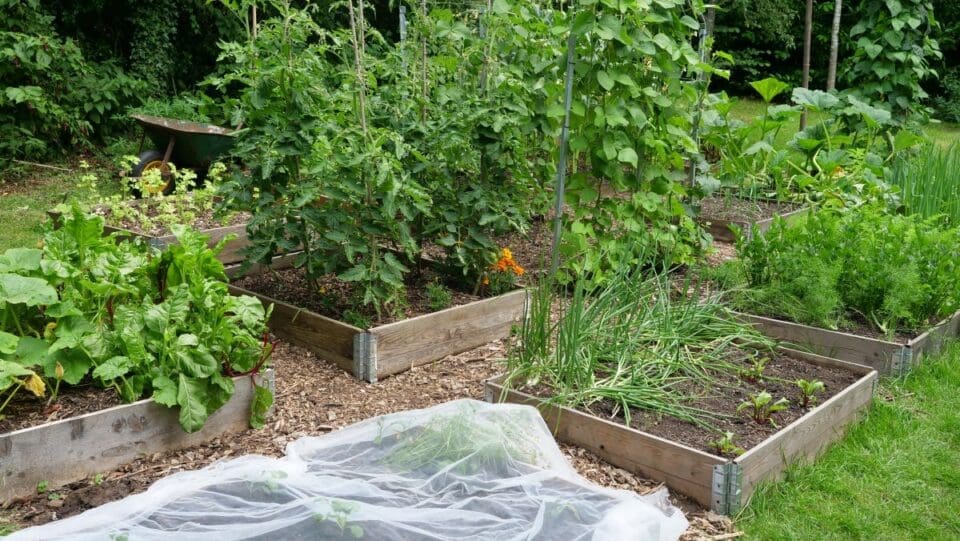
Starting your first vegetable plot or allotment is beyond exciting. There’s just so much opportunity, so much promise – the possibilities are seemingly endless! I broke ground on my first vegetable garden aged 11. With youthful exuberance on my side, I proceeded to dig over my new, very weedy plot using nothing more than a… try not to laugh… hand fork. I laboured for hours over weeks to get things in shape for sowing, not really having any clue what I was doing. It kept me entertained at least!
Of course, armed with the internet and, it goes without saying, a subscription to Kitchen Garden magazine, there’s no excuse for not swotting up before even so much as lifting a muddy finger. I wish I had read around the subject first, or at least had the common sense to ask for help. So, with that in mind, here’s what I wish I’d known when I started on my growing adventures (and misadventures!).
Enjoy more Kitchen Garden Magazine reading.
Click here to subscribe & save.
1: Use winter to plan ahead
When you’re raring to go it takes a good dose of self-restraint to stop, take a breath, and give things a proper think. As my granny always used to say, planning makes perfect, and with midwinter upon us, now’s the ideal time to work out what goes where and set yourself up for a fruitful first year.
First off, make a list what you like to eat and how much of it is likely to fit into the space you have. This minimises impulse buying of unnecessary seeds and plants, though a few extras always seem to slip through the net! Most crops thrive in direct sunshine, but there’s a good number that will cope with light or dappled shade. Still, the sunniest, most sheltered position will give the best results.
As a beginner it’s worth seeking out varieties that will set you up for success – varieties promising extra vigour, bigger yields, pest or disease resistance (or both), or that can cope with cooler weather (to insure against disappointing summers).
Note when crops are likely to be sown and harvested then use this to map out where and when gaps will appear. For example, if overwintered kale is likely to be done by May, then perhaps this is the ideal position for summer crops like courgette or squash? Winter-hardy salads might follow on from onions harvested in July. While leeks could be hot on the heels of early carrots. In an ideal world the ground will always be growing something and with time you can make gaps fewer and further between, boosting your overall yields.
If you can, locate your new veg plot close to an outside tap, or design in provision for collecting rainwater so you always have an on-site source of water. Other practical considerations include space for composting and somewhere close by for tool storage (a bench with a lidded, boxed-in-seat, for example). Draw your plot, dividing growing areas into at least four separate sections to aid crop rotation. Raised beds can make this easier as you can designate each bed to a specific crop family.
2: Take time to care for your soil
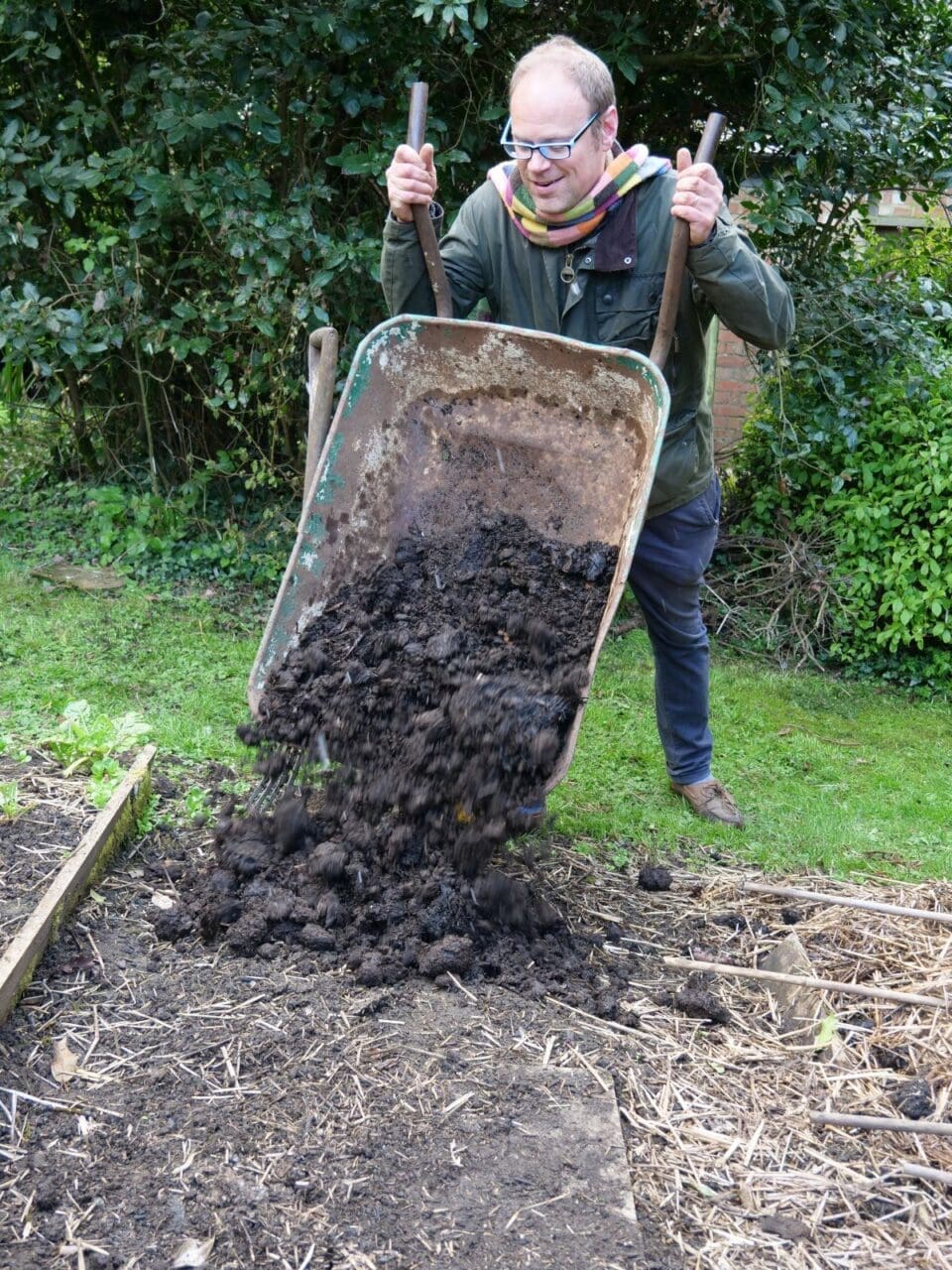
Regular applications of compost or well-rotted manure will help your garden thrive
Soil that is in peak condition grows the best food, and more of it. Everything starts with the soil, so efforts made to improve it is time well spent. Many new growers get off to a strong start only to find things slow down from their second year. The reason is often a lack of love for the soil.
Feed the soil and it in turn will feed the plants grown in it. The simplest way is to add an inch-thick layer of garden compost, very well-rotted manure or similar organic matter at least once a year. Late autumn or early winter is the best time to do this, but more organic matter can be added whenever the opportunity arises – for example laid between well-established crops like overwintering sprouting broccoli or schlepped around sprawling squash. This will then get taken down into the soil by the many worms and other soil life to work its magic.
As well as adding nutrients to support strong growth, organic matter improves soil structure, ensuring sandy soils hold onto moisture for longer, while heavy soils prone to waterlogging drain better.
Organic matter of any type – even piled-on autumn leaves – also helps to feed the soil life itself. Plants depend on a universe of beneficial bacteria, fungi and microscoPic 036 creatures that together ensure roots can access everything they need. Life is intricate and complicated but the solution to support it simple: add organic matter whenever you can.
3: You can start small
Start small and only expand as experience, confidence and time allow. Unused ground can always be covered with cardboard or weed-suppressing membrane to keep weeds in check, or planted with easy-to-grow, space-hungry crops that will naturally crowd out the weeds – for example potatoes, winter squash or pumpkins.
Of course, most gardeners inevitably lament their lack of space, so when that time comes think upwards. Arches over paths make fantastic supports for climbing vegetables like runner beans, as well as a magnificent centrepiece to the garden or allotment. Alternatively, use bamboo wigwams or trellis as supports for climbers.
Don’t forget walls and fences, which make great vertical growing surfaces for secured-in-place pots or tubs, or wall-trained fruits. Imagine a sun-drenched wall brought to life with aromatic herbs, a rambunctious kiwi vine or drool-worthy strawberries. Lovely stuff!
4: Get a headstart by sowing into pots or modules
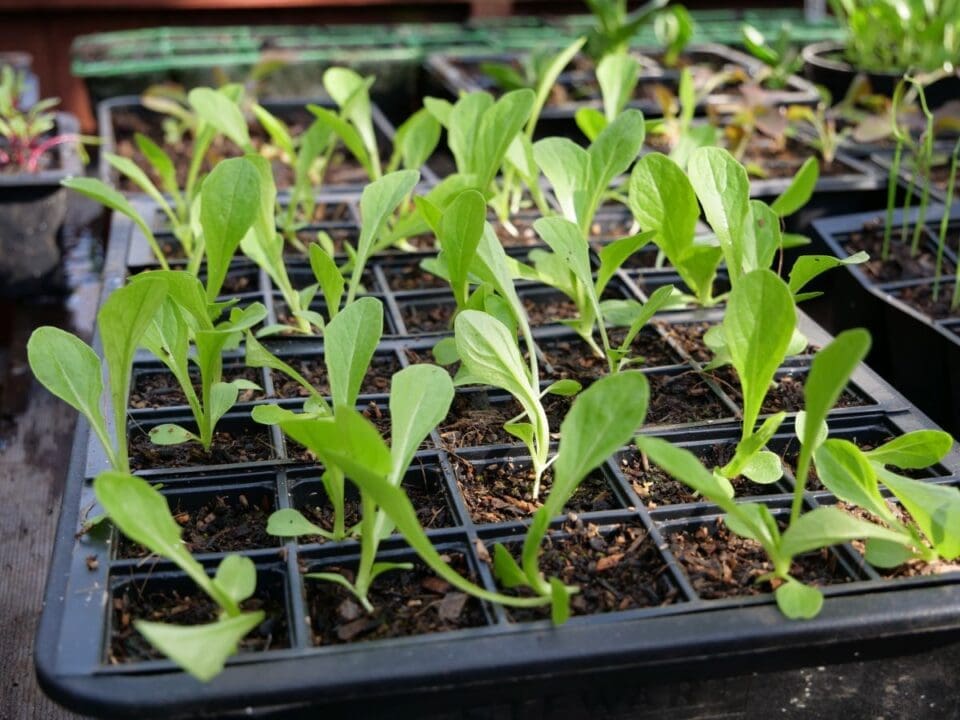
Sowing directly into the ground is a fantastic option for quick growers like radishes or salad leaves, as well as most root vegetables like carrot or parsnip that don’t like to be disturbed. Otherwise, it pays to start seedlings away from the veg plot, by sowing into pots or modules. Starting elsewhere keeps tender young seedlings away from threats like slugs, caterpillars or sharp frost, while germination is often more reliable in a controlled environment like a greenhouse, cold frame or even a windowsill.
Starting crops off in modules enables an earlier start to the growing season because you can sow while the soil is still quite cold and/or wet – ideal to get a head start on, say, early varieties of beetroot or spring onion. And by sowing away from beds crops can be overlapped, so as one vegetable is finishing off, another will already be underway ready to go in the moment it’s done. Having ready-to-plant seedlings or young plants means crops can be planted at their exact final spacing too, ensuring maximum efficiency and no wasted space.
Invest in decent, well-made module trays for all this. Cheap, thin plastic that readily crinkles and cracks is a false economy, but quality trays will last a literal lifetime. I buy mine from Containerwise (01302 591490, containerwise.co.uk).
5: There’s no shame in ‘cheating’
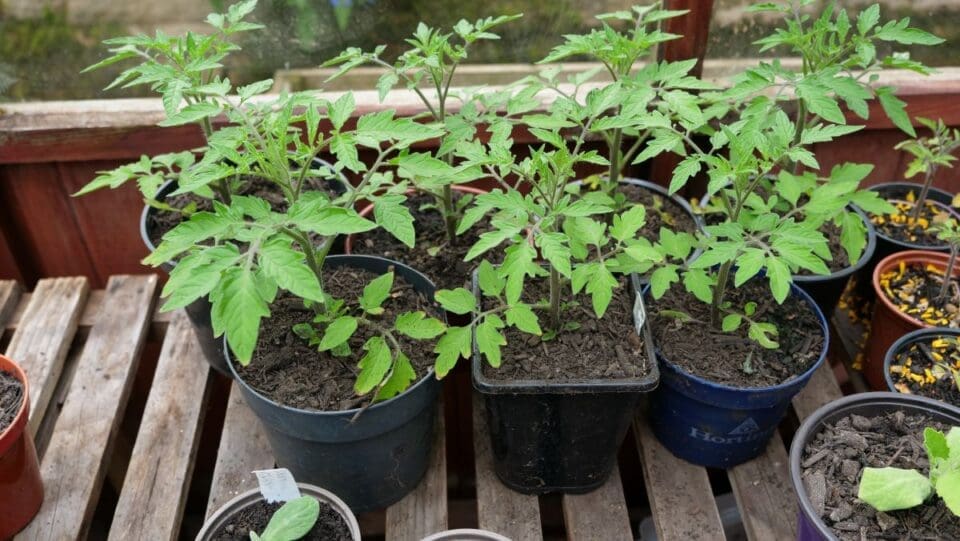
I see nothing wrong with buying in ready-to-plant seedlings or plants if it saves time, effort or risk. Growing a range of tomatoes varieties, for example, would require several seed packets, which makes little sense if you only want one or two plants of each. Buying in young plants, on the other hand, opens up this Pic 036k-and-mix opportunity without having to go the expense and potential waste of all those seed packets. It also gets you over the most precarious stage of life, so success is almost guaranteed.
Seek out end-of-season bargains – young plants at a big discount are a great way to fill out a veg plot or plant up a fruit garden.
6: Things will go wrong – don’t panic!
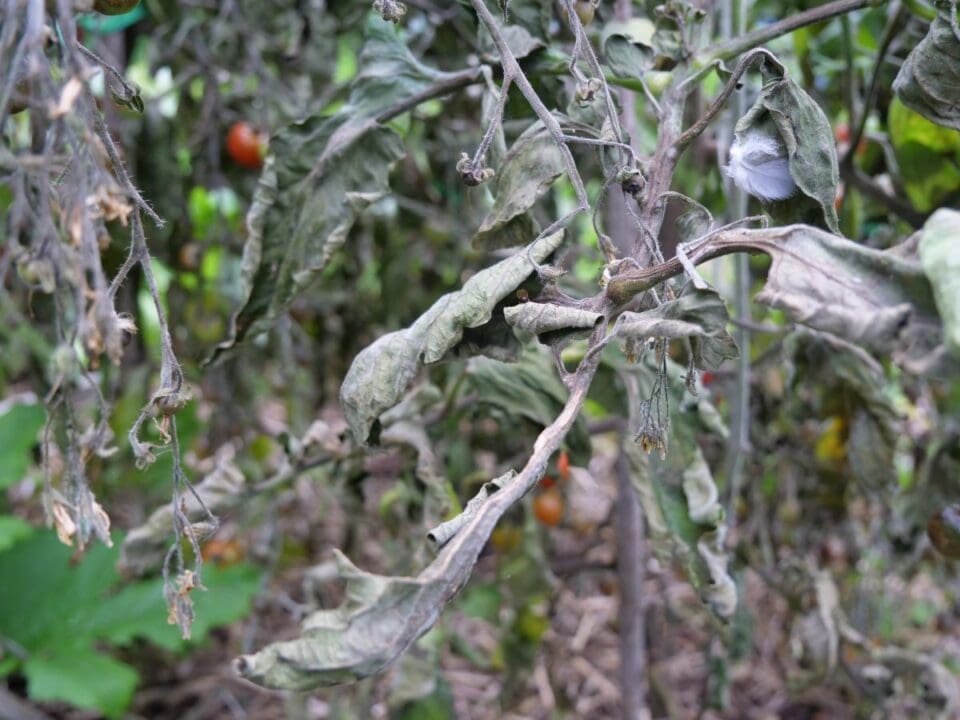
When it comes to gardening, one thing’s certain: unpredictability! Growing your own food is beset with setbacks – insect pests like aphids, the sudden arrival of potato blight or the unwanted peckings of a hungry pigeon. Then there’s the weeds, which never give up. The only response is to keep calm and garden on.
You can’t eliminate every threat, but you can at least put yourself in a stronger position. Use insect mesh or fleece to keep pests off vulnerable vegetables like cabbage family plants. Head out at least once a week with a kneepad, bucket and hoe to bear down on weeds before they get out of hand. Be pragmatic – no gardener can remove every weed or guard against all pests; the occasional loss of a longed-for crop is part of the learning process, and as a gardener the more you learn, the more you realise there’s so much more to learn!
My garden often looks a bit of a mess, with nettles at the margins and the occasional mangled plant. But gardens that are a bit rough around the edges are usually the ones that will attract wildlife, including pest-munching characters like hoverflies, ground beetles and insectivorous birds. That’s my excuse anyway!
7: Enjoy the process
Finally – and most importantly – remember to enjoy the whole process. There’s little point growing your own vegetables and fruits if you don’t find joy along the way. Include areas to sit and admire your hard work, to take stock and rest awhile. Having a moment to appreciate just how far you’ve come and to commune with nature is what makes kitchen gardening so compelling.
Even more quick tips…
Weed them out: Take time to remove perennial weeds and their roots before starting work. Unused areas can be smothered with cardboard to weaken them.
Easy does it: Begin with easier crops to build confidence. My recommendations are courgette, salad leaves like lettuce, potatoes, radish and runner beans.
Mulch: Lay loose organic materials such as grass clippings around actively growing crops throughout summer to lock in soil moisture and slow weed growth. Apply little and often.
Include flowers: Don’t forget to include pollinator-friendly flowers like marigold, calendula, alyssum and zinnia. They will improve overall fruit set and attract pest predators.
Beg and borrow: Keep costs down. Use old fruit punnets or yoghurt pots to grow seedlings, make your own compost, and take advantage of free or cheap seeds. Ask fellow growers for help.
Keep it fresh: Don’t get stuck in a rut. Try new things, for example unusual varieties or different growing methods. It will help to keep that wonder and excitement alive.