
There’s nothing worse than blunt pruning tools. Martin Fish shows you how to give them a good overhaul so they can do the job they are designed to do.

In January, when the weather is often too cold and wet to be out in the garden, we can get on with a few indoor jobs to make sure we are prepared for the growing season ahead. One job I like to do is make sure that all my pruning tools, such as secateurs, knives and loppers, are clean, sharp and ready for action.
Why should I sharpen my gardening tools?
From now through until spring there’s plenty of pruning to do on fruit trees and fruit bushes in the garden and a sharp pair of secateurs makes the job much easier. This was drummed into me many years ago when I was a student at college and before every practical session we had to check our secateurs were sharp. As well as making the pruning easier, clean cuts also heal faster than a jagged wound.
Enjoy more Kitchen Garden Magazine reading.
Click here to subscribe & save.
Sharpening your pruning tools is easy and once the blades are sharp, it’s simple to keep a good edge on the cutting blades. You do need a little equipment to be able to sharpen your tools, but once you have it, it will last for years.
How often should I sharpen garden tools?
It’s a good idea to sharpen tools at least once a year, ideally before each growing season so they’re sharp and ready to use when you need them. Once they have been sharpened once, it’s simple to keep a good edge on the cutting blades. If you’re careful to keep tools clean, they’ll need sharpening less.
Otherwise, a good rule is simply to sharpen your tools whenever you begin to notice they are getting dull or not cutting so well.
What equipment do I need to sharpen my gardening tools?
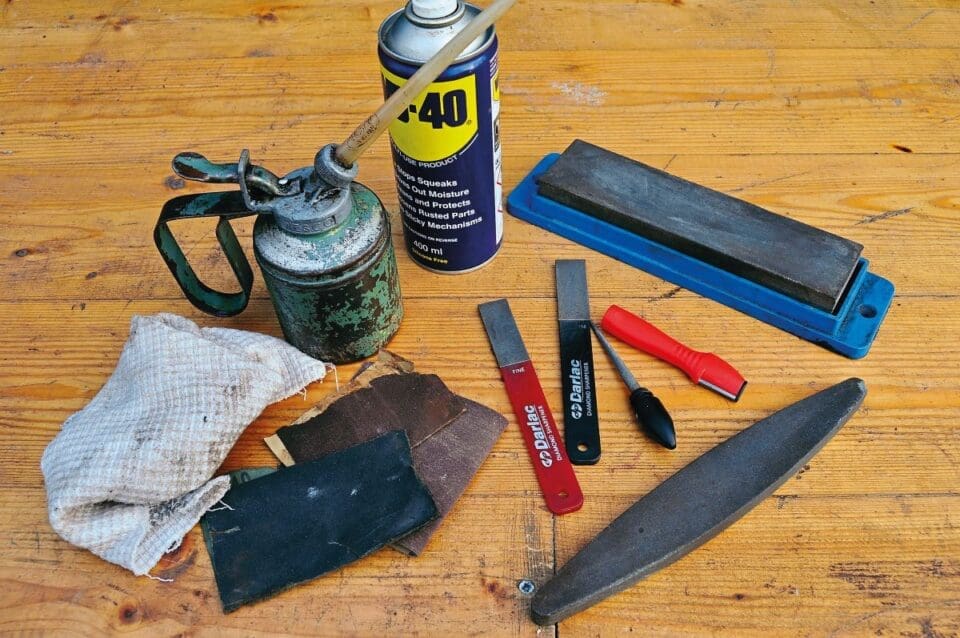
- A fine spray oil such as WD40 or Gardinol (PTFE free) will loosen the hinge mechanism and help to remove dirt and a build-up of dried sap on the blades. It’s also great for removing rust!
- A thicker oil is also needed to lubricate the spring and hinge after sharpening. I tend to use the oil that goes in my mower or 3-in-1oil is perfect and will help prevent rust forming again.
- Fine sandpaper, steel wool or emery cloth to help clean the blades use. This is particularly useful where blades have rusted.
- Sharpening stones. Traditionally we used wet or oil carborundum stones, but you can also get smaller diamond tipped and tungsten steel sharpeners which are easy to use and make a great job.
- Cloths to wipe off the grime and to apply a thin coat of oil after sharpening. I find my old cotton shirts are perfect for this!
Before you embark on a sharpening exercise, have a good look at your tools first because different types of knives and pruners need sharpening slightly differently.
For example, with bypass secateurs the cutting blade has a bevel on one side and is flat on the other, so only the bevelled edge is sharpened. With anvil secateurs the blade is double edged and both bevels need to be sharpened. This also applies to larger pruners and knives which can be single or double edged.
When sharpening always take care and if you feel more comfortable, wear some gloves when handling the blades. Never test the sharpness of a blade by running your finger along the blade. The way to do it is to gently stroke across the blade at 90 degrees.
How to sharpen garden tools step by step (with pictures)
1. Clean
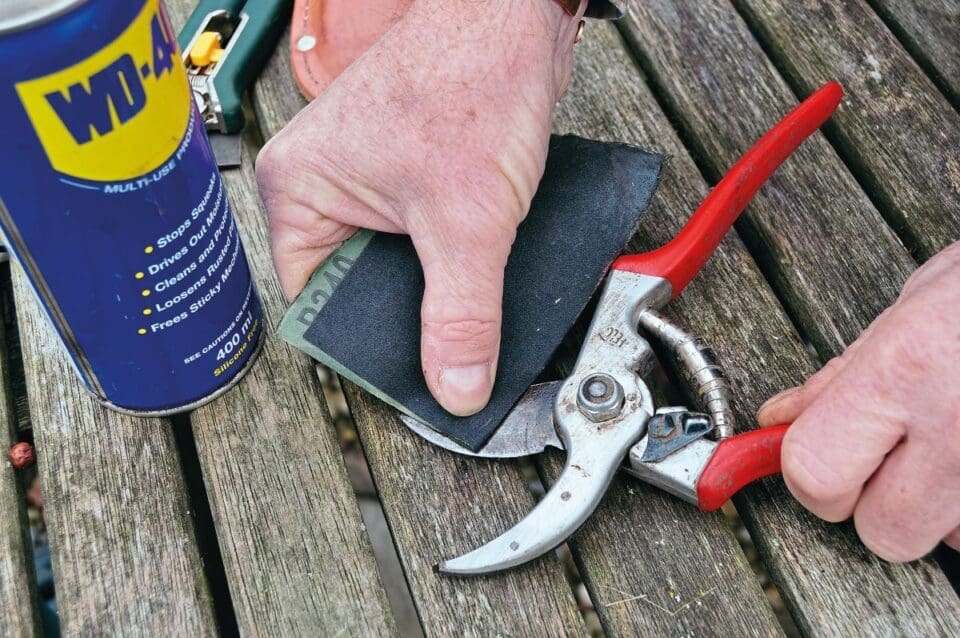
First thing is to give your pruning tools a good clean. Spray a little WD40 onto the blades and use fine sandpaper or wire wool to remove dried on sap, dirt and rust. The aim is to get back to the steel, but bear in mind that some blades are shiny steel and others coated in black.
2. Sharpen
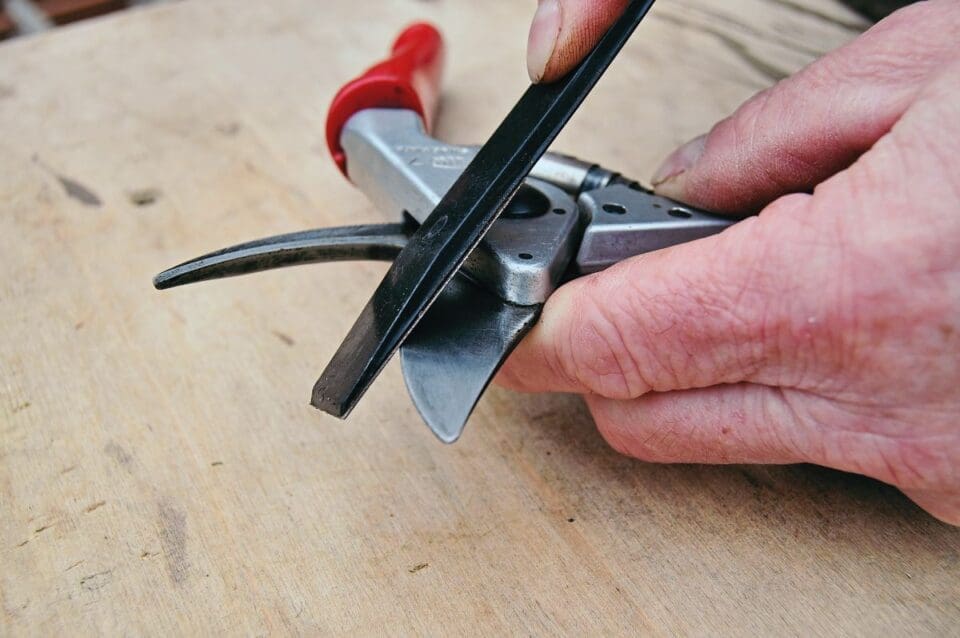
On bypass secateurs you can use a flat diamond sharpener or a diamond-tipped steel to stroke firmly along the angle of the cutting edge. Ideally, start with a coarse and finish with a fine sharpener for a sharp edge, making sure you follow the exact angle of the bevel and curve
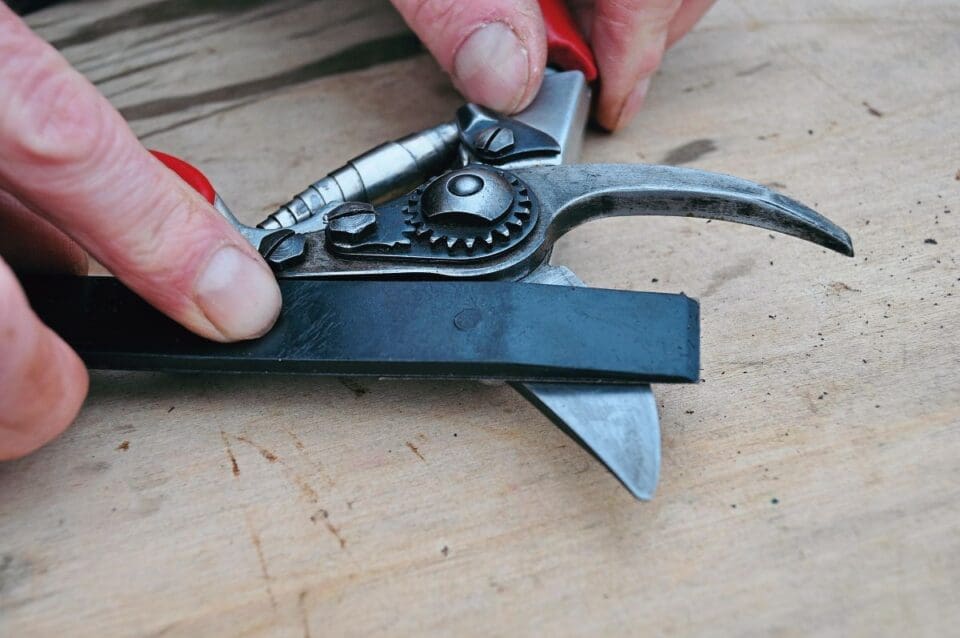
Once you have a good, sharp edge along the curved bevel edge, turn the secateurs over and using a flat diamond sharpener hold it flat on the blade and gently stroke it across the blade to remove any burrs created when sharpening the bevelled side. This side must remain totally flat.
On anvil pruners use a diamond sharpener with a sweeping or circular action, taking care to follow the angle of the bevel. Both sides of the blade need to be sharpened. I usually sharpen one, side then the other and repeat a couple of time to make sure it is even.
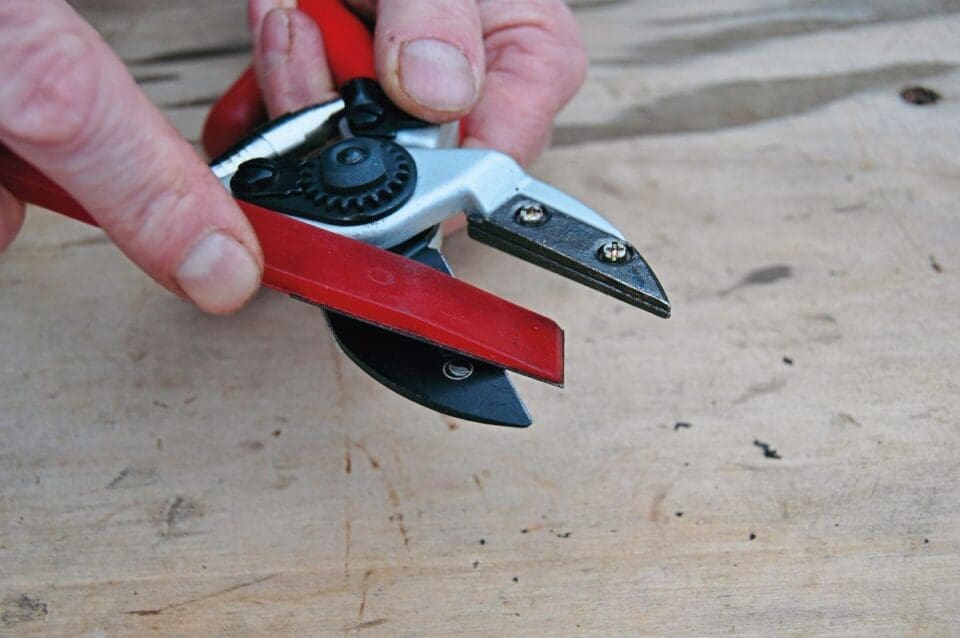
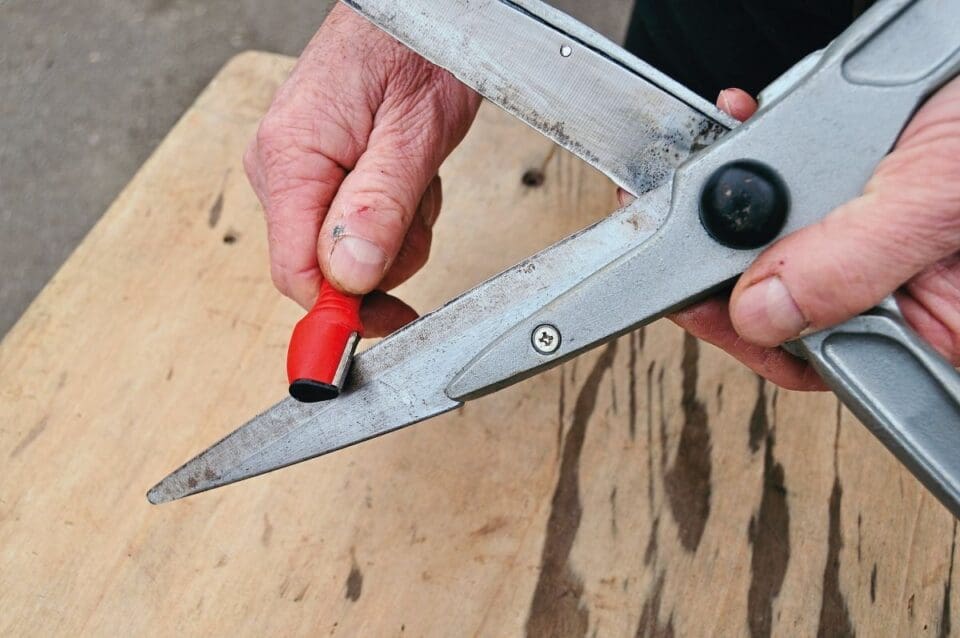
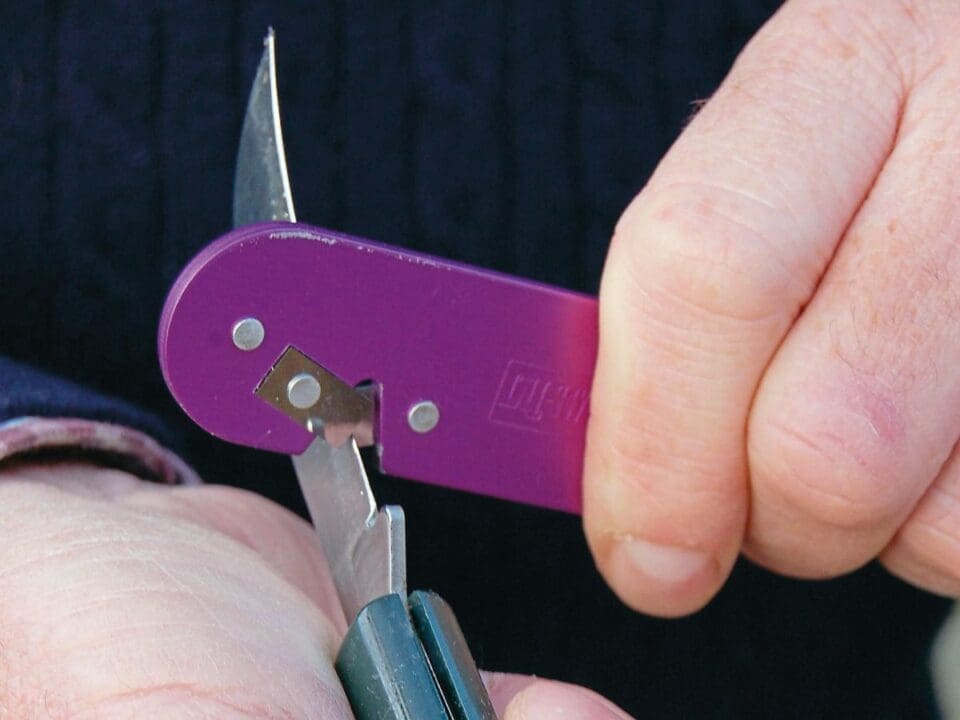
If sharpening large pruners, shears or the sheep-shearing scissors, a tungsten blade is ideal and is drawn along the length of the blade, following the angle of the bevel. On pruners it’s usually both sides of the blade, but with a scissor action just one side and the inner side flat.
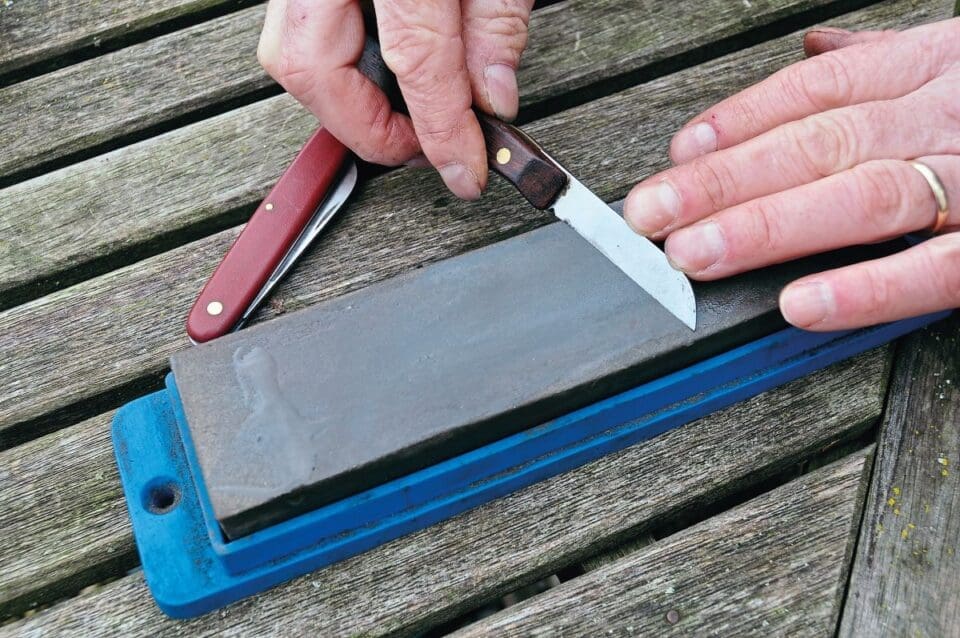
For flat bladed knives with a single edge I prefer to use a flat carborundum stone with a few drops of oil. Gently push the blade forwards along an oiled stone, while maintaining the angle of the bevel. When sharp, turn over and remove the burr. You can also use a diamond sharpener.
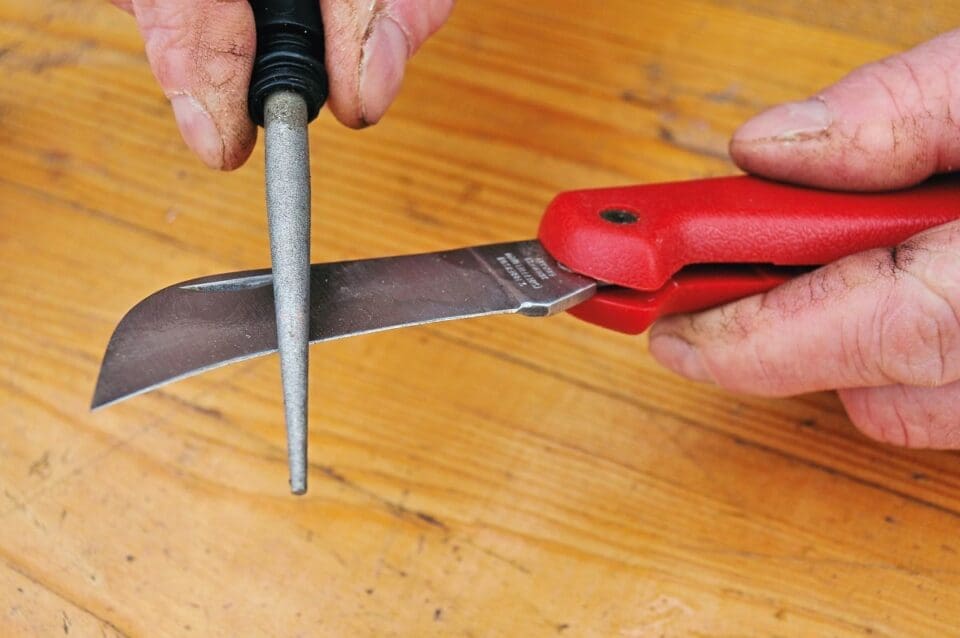
Very often curved bladed knives are double edge with a bevel on both sides and these can be sharpened with a round diamond tipped sharpener or round carborundum stone. Gently stroke the sharpener along the blade or make a circular action.
For double edged blades you can also get sharpeners where you simply insert the blade and pull it towards you. The tungsten blades in the sharpener hone the edge on both bevels at the correct angle at the same time. These work well but are not suitable for single edged blades.
3. Lubricate
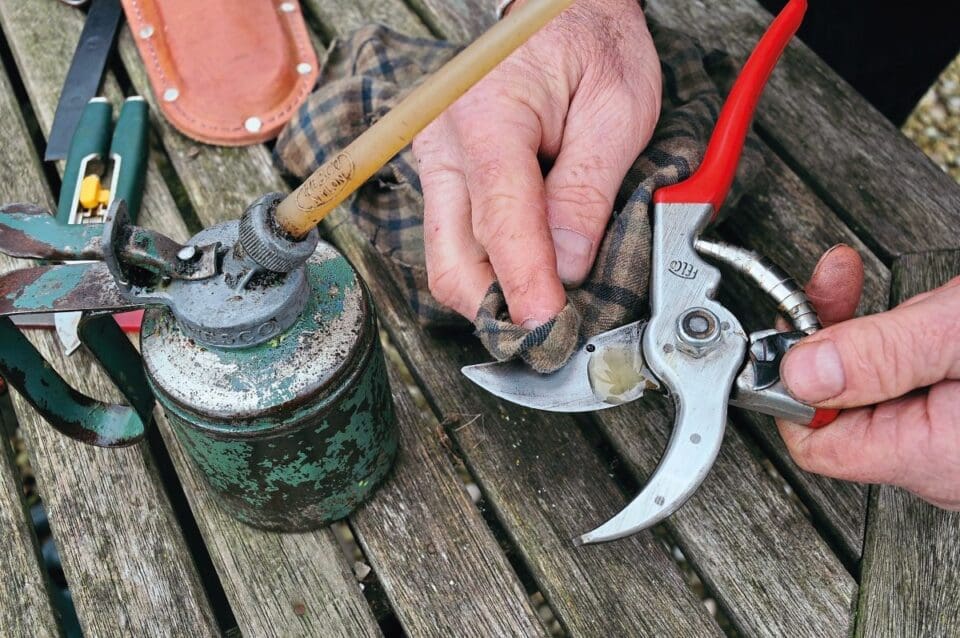
Finally, when the blades are sharp, add a few drops of 3-in-1 oil or engine oil on to the blades, spring and hinge and spread it around with a soft cloth to form a thin barrier. This helps to keep the hinge lubricated and prevents rust from forming on the blades.
How do I know if my gardening tools are sharp enough?
Once sharpened, the ultimate test is to try secateurs and pruners on some woody stems. They should make a clean cut without any jagged edges. With knives and scissor action tools, if they cut through paper, they are sharp.
By keeping your pruning tools clean and sharp and they will last for many years and be easy to cut with.
Happy pruning!