
There’s something otherworldly yet incredible about mushrooms. If you’re looking for something quick and easy to grow this winter, look no further. Benedict Vanheems shines a light on the ‘dark side’ of kitchen gardening!

Mushrooms have always fascinated me. They lurk out of sight below ground for much of the year then one day – bang – pretty much overnight, the fruiting bodies explode into life to captivate and beguile. Whether it’s the bright red toadstools of the fly agarics or the hand in hand dance of fairy rings, mushrooms are truly magical.
Neither plant nor animal but a kingdom all their own, science is only just catching up with the wondrous powers of fungi. It’s no exaggeration to say they are incredible! The largest organism in the world is a type of honey fungus covering more than 2000 acres. Fungi networks help to connect trees and plants, so they can draw on more resources while communicating advance warnings about, for example, pest or disease attacks.
Enjoy more Kitchen Garden Magazine reading.
Click here to subscribe & save.
They make great eating too of course, while many mushrooms offer health and cognitive benefits that thrust them into a league of their own. The even better news for us gardeners is that growing many types of mushrooms is a surprisingly speedy undertaking, and the end result deeply satisfying.
Nature’s recyclers
Fungi are nature’s original recyclers. They help to break down dead organic matter, releasing locked-up nutrients for the next generation of life. This makes them incredibly efficient at growing on materials out of bounds to most plants: straw, wood, coffee grounds, sawdust, even old books! The growth cycle is genuinely gripping to witness, a sort of horticultural alchemy.
The most common way to grow mushrooms is to use a kit. These plug-and-play setups guarantee great results, indoors, and at any time of the year, making them a fantastic project for when all is quiet on the veg patch. Most come ready boxed – just open them up, regularly mist the pre-inoculated growing medium and wait a matter of weeks to start cropping. Kits offer an easy, failsafe introduction to growing the likes of gourmet oyster, shiitake and chestnut mushrooms, with repeat harvests over two to three pickings or ‘flushes’.
Most kits use a straw-based growing medium, though there are some that also make good use of spent coffee grounds, and one that even recycles old paperback books into edible shrooms! The optimal temperature for most mushrooms is around 15-20°C, which makes them perfect for an unheated room. With recent soaring energy costs, finding a suitable location in our house is very straightforward!
Growing mushrooms in a bucket
While kits are certainly convenient, they struggle to offer a competitive financial edge to simply buying mushrooms from the supermarket. But with a little extra effort it’s possible to grow mushrooms far more cost effectively. Oyster mushrooms are the easiest of all to grow, making them ripe for adapting to a homespun growing setup.
Growing mushrooms without the aid of a kit starts with good-quality spawn, usually in the form of colonised barley grains, or grain spawn. Oyster mushrooms readily grow on straw, which can be picked up very cheaply from pet supply stores. One bag of straw, costing in the region of £3-4 will provide growing medium for several buckets. And it is buckets that will serve as the container for these mushrooms – cheaply purchased online or repurposed from cleaned out catering-sized containers. The buckets can be used time and again.
How to grow oyster mushrooms in a bucket step-by-step
- Prepare five-litre lidded buckets. Drill eight holes, 10-12mm (0.5in) in diameter, across the sides in two staggered rows. Drill smaller drainage holes into the bottom.
- Pasteurise the straw to kill off most unwanted bacteria. Stuff the straw into net sacks and cover with very hot but not boiling water. Leave for half an hour then remove to cool and drain off.
- Clean and sterilise everything else very thoroughly. Use isopropyl alcohol or a similar steriliser to wipe all surfaces, including the bucket, outer packaging of the grain spawn, and your hands.
- Fill the bucket, starting with a layer of straw then some crumbled grain spawn. Push down as you fill, alternating layers till you get to the top. Aim for about 5-10% grain spawn to 90-95% straw.
- Seal the side holes with surgical tape to keep the straw clean. Keep the bucket in a warm place and wait two to three weeks for the straw to become colonised by the white mycelium.
- Remove the tape or leave it to drop off. Mist regularly from this point, ensuring the bucket receives indirect sunlight. The tiny ‘pins’ will quickly grow into mature mushrooms.



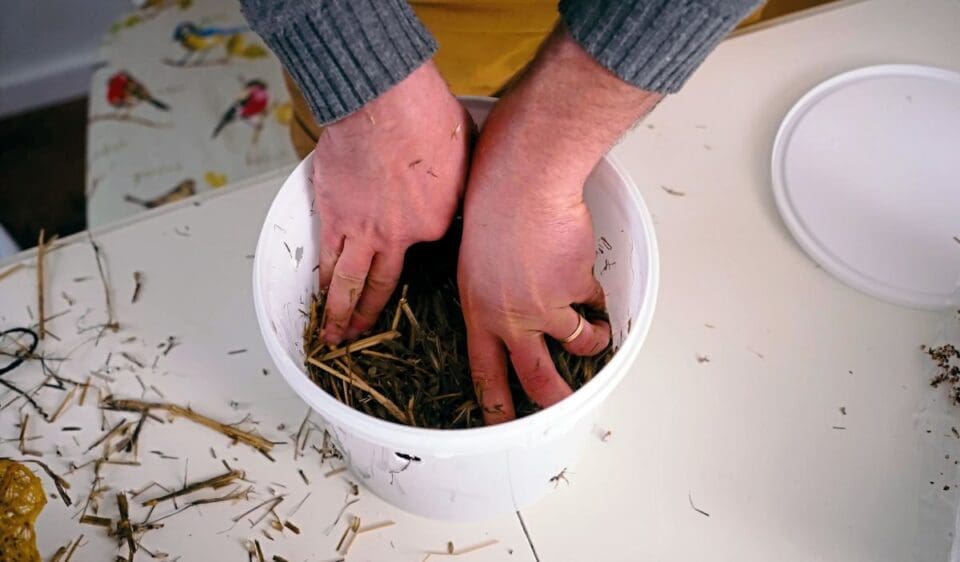

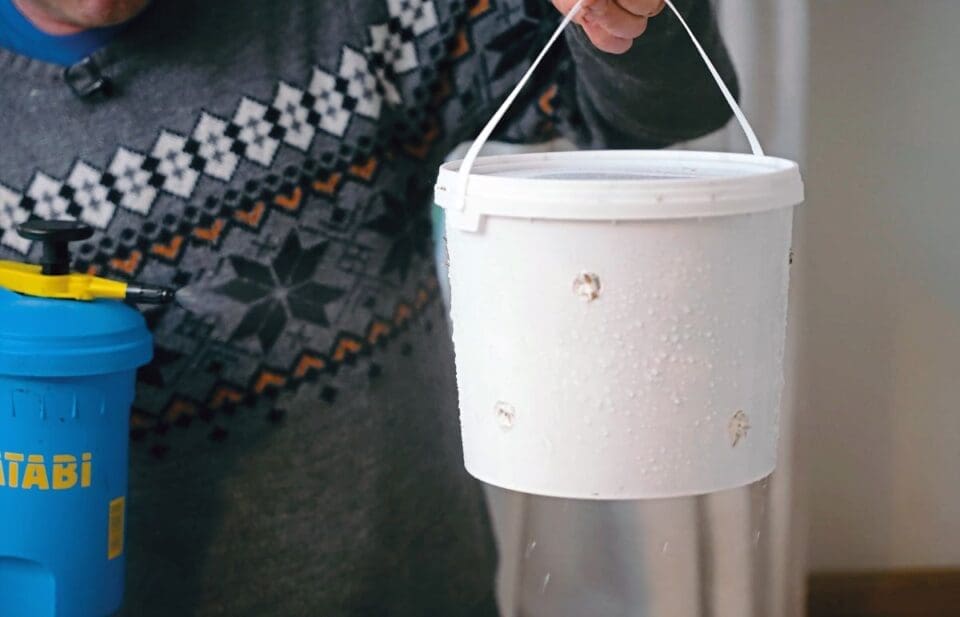
Bucket harvest
The magic happens over the coming weeks as the straw is slowly colonised by the ‘roots’, or mycelium of the spreading fungus. Within two to three weeks the straw will have turned white, and the excitement really begins!
Carefully remove the surgical tape or simply leave it to drop off as the fruiting bodies push through. From this point on regular misting is required to maintain high humidity and encourage the mushrooms to push through. Once the mushrooms start to form you will be astonished by how quickly they swell, often doubling in size overnight! Pick mature mushrooms by twisting them free from their holes and continue misting to encourage the next flush.
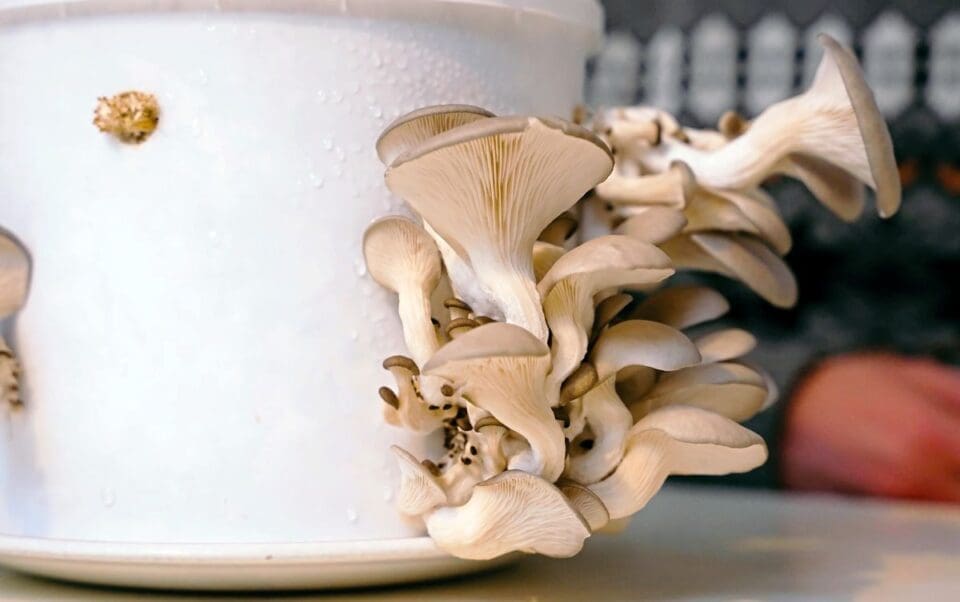
Growing mushrooms on a log
The next step up from growing mushrooms in buckets or kits is to try logs. This isn’t difficult, but you will need fresh hardwood logs and patience, as the first mushrooms take over a year to appear. Once they get going, however, they will offer repeat harvests over several years as they slowly decompose the dense wood.
If you have been completing heavy pruning on hardwoods such as chestnut, birch, beech, hazel or alder – to name a few – then you may have suitable logs of around 10-20cm (4-8in) diameter. Or get friendly with your local tree surgeon. It is important that the logs are still fresh. Anything older than six weeks risks the logs having already been inoculated with an undesirable fungus.
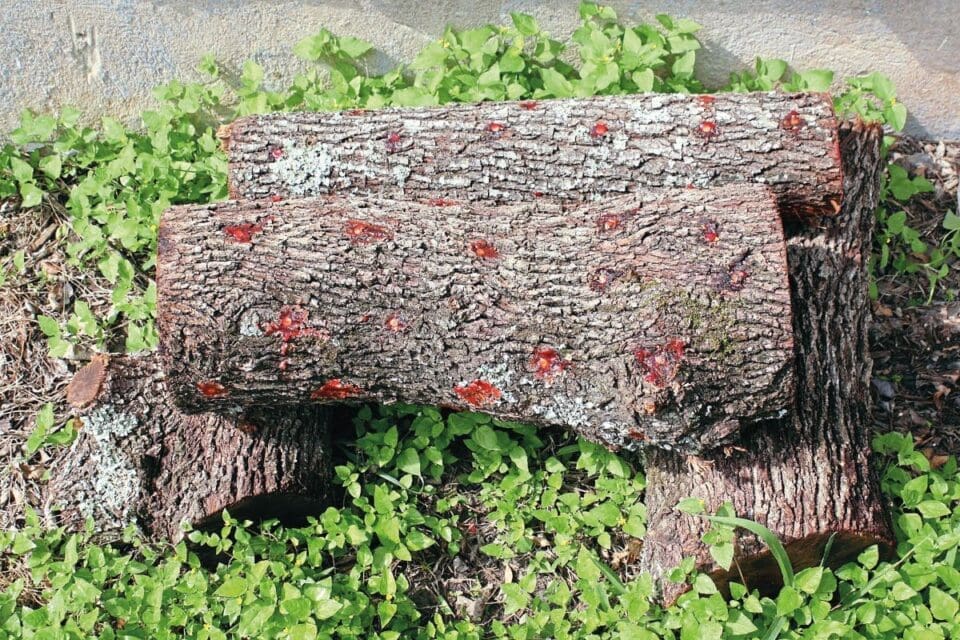
To grow in logs, you will need special inoculated wooden dowels, available from mushroom suppliers, which can then be hammered into holes drilled throughout the log. To give logs the best chances, the dowel-driven holes are then sealed with wax before locating to a cool, shady spot such as under a tree or shrub. Logs will need watering during dry spells to stop them drying out.
The great joy of growing in logs is the opportunity to broaden the range of mushrooms you can enjoy. Joining the usual suspects are the likes of beefsteak, reishi and enoki mushroom, as well as the deliciously named chicken-of-the-woods. And what better way to make culinary use of a shady corner of the garden where few other edibles will grow?
Mushrooms throw out the playbook. They grow in the most unlikely way and with sometimes spectacular speed. They can turn old and unloved into new and delicious! And they never fail to intrigue and amaze.
How to grow mushrooms on logs step-by-step
- Growing in logs starts with inoculated grooved wooden dowels. Mushrooms suppliers can advise on the best tree species for the mushroom you wish to grow.
- Drill holes about 15cm (6in) apart right across the log. Hammer in the dowels so they are flush with the bark then seal them in with molten wax.
- Move logs to a shady spot. Logs may be stacked or, more usually, nestled upright into the ground, which will help to keep them moist. Water in dry spells.


Which mushrooms shall I grow?
There’s more to it than button mushrooms! Here are some popular, easy-to-grow options to try indoors.
Chestnut: Button mushrooms mature into chestnut mushrooms, developing superior taste and a higher vitamin content as they do so.
Oyster: Oyster mushrooms are among the very easiest to grow. Choose from yellow, pink, and grey – the simplest of all.
King oyster: This type of oyster takes the crown for its regal appearance. Bold, beautiful fruiting bodies with a deep flavour.
Shiitake: Popular in Asian cuisine, the shiitake has an irresistibly meaty texture and outstanding umami flavour.
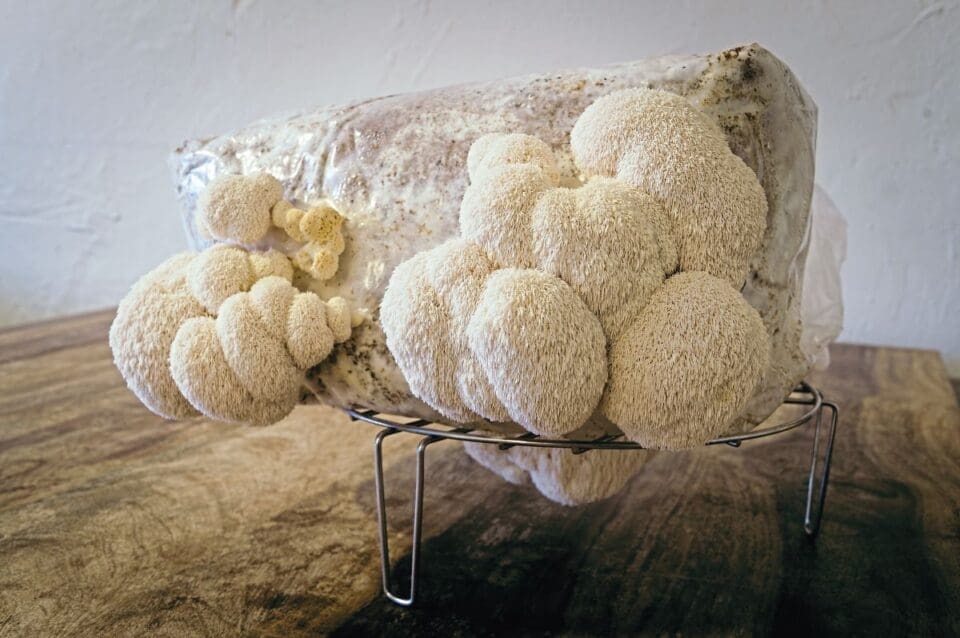
Lion’s mane: Often called the ‘brain mushroom’ for its remarkable benefits for mental clarity. It has a top-rate taste too!

Mushroom suppliers
The following suppliers are a fantastic source of in-depth growing guides and information, as well as offering high-quality kits, spawn and growing materials.
Caley Brothers: caleybrothers.co.uk
Gourmet Woodland Mushrooms: 07514 057722, gourmetmushrooms.co.uk
GroCycle: grocycle.com
Urban Farm-It: 01227 532664, urban-farm-it.com