
You’ve spent the summer growing tomatoes and suddenly they’re all ready at once! What can you do to stop them from going to waste? Benedict Vanheems shares some ideas.
Started early enough, and with a good summer and fair winds behind us, there’s every chance there will be more tomatoes than you can shake a bamboo cane support at!
It’s easy to keep pace with a steady succession of trusses from cordon or indeterminate varieties. Bush, or determinate tomatoes, on the other hand, have a habit of ripening all at once, in the tightest of windows – often within a few short weeks. That’s because fruits are borne towards the end of each branch, rather than setting truss by truss as the vine grows. Growing bush tomatoes means being prepared for the inevitable glut.
Enjoy more Kitchen Garden Magazine reading.
Click here to subscribe & save.
Thankfully, turning a seemingly overwhelming deluge of fruits into store cupboard staples is a breeze.
Here are a few things you can do to make the most of a glut of tomatoes:
- Freeze them: Tomatoes can be frozen whole or chopped to simply dump out into dishes as and when they’re needed.
- Make into a sauce: I prefer to cook up a basic tomato sauce and then freeze in recipe-sized portions because it saves on valuable freezer space and cooking time further down the line. (Find a recipe below)
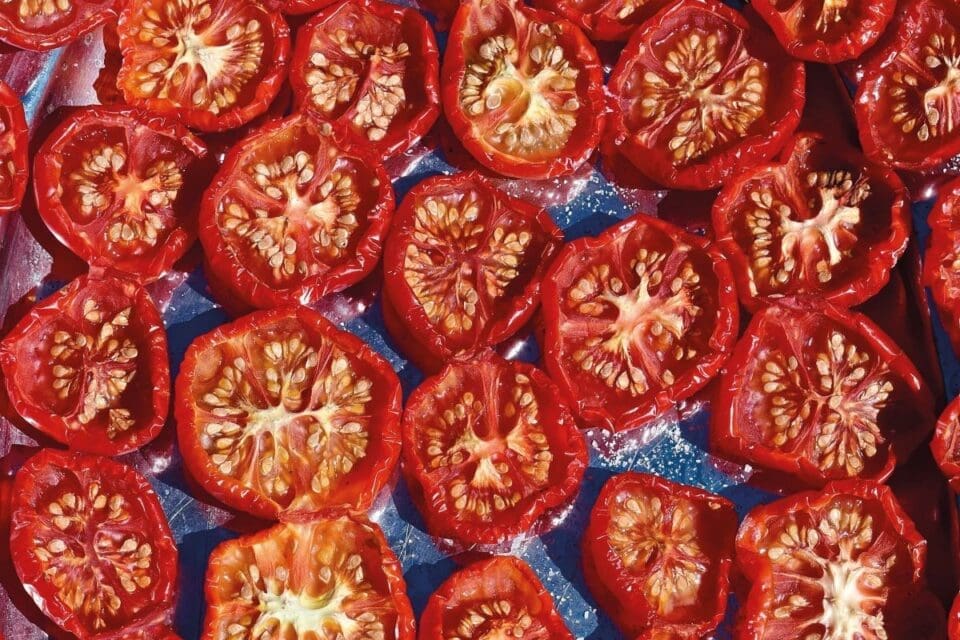
- Dry or dehydrate them: Sundried tomatoes add a luxurious depth of flavour to so many recipes. We may not have the sunshine, but we can get something similar by dehydrating fruits. Cut firm fruits into slices then lay out on to trays to dehydrate at around 65C (149F) over around five hours. If you don’t have a dehydrator, lay the slices out on a baking tray and place into a just-warm oven to dry out over several hours, checking on progress regularly. Dried tomatoes can be stored in airtight jars in a dark, dry place, or frozen for longer storage.
- Can them: You can buy canners, but they aren’t a requirement. Find out how to can your own tomatoes below.
How to can tomatoes without a canner
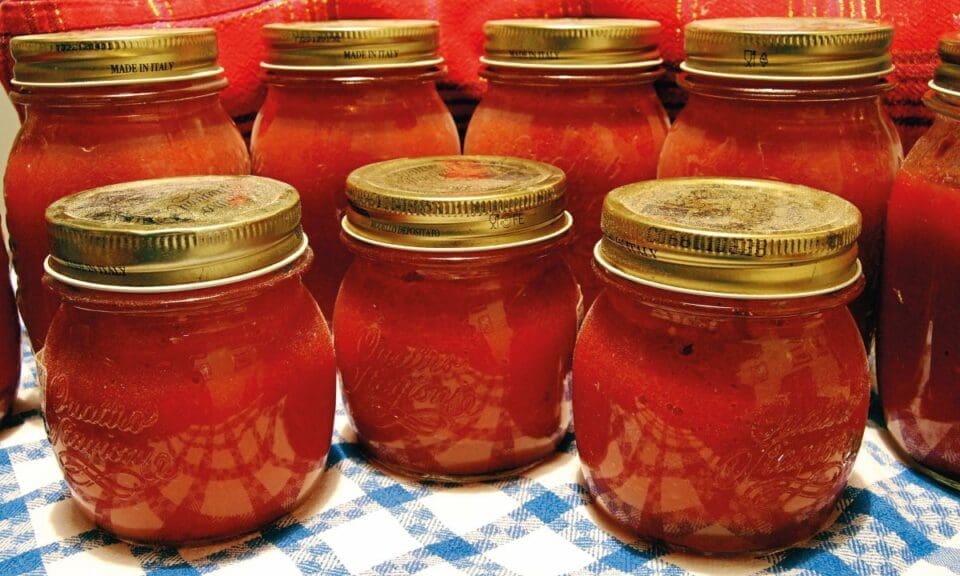
Bottling, also known as canning, is a fantastic way to lock in that heady taste of summertime. The big advantage to canned produce is that it can be stored at ambient conditions, ready to pull from the larder whenever a blast of flavour’s called for. Our friends over the pond are big on this, and it’s a preservation technique I reckon we should sharpen up on.
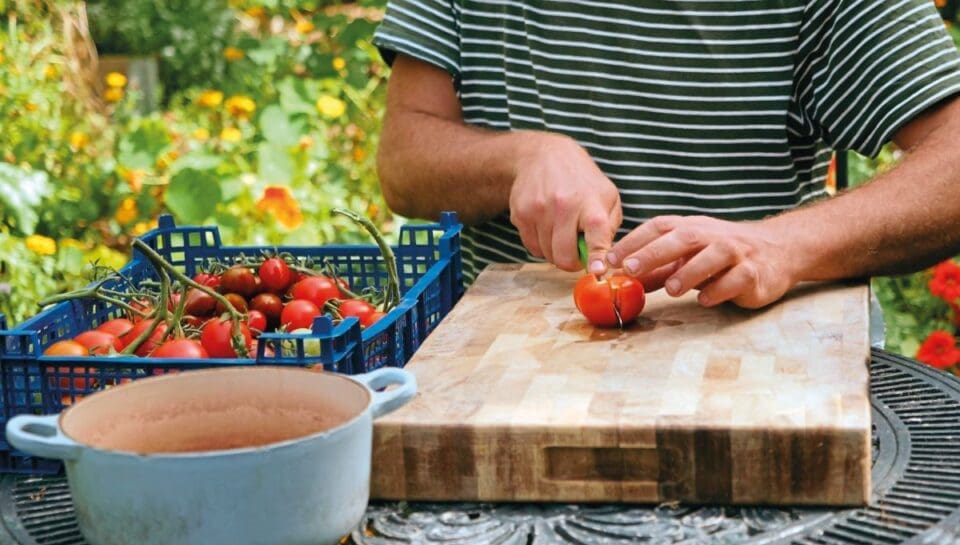
You can buy canners, but canning is easy to do without any specialist equipment. Wash, peel and chop your tomatoes then pour into sterilised preserving jars – Kilner jars are ideal – filling to within a centimetre of the rim.
Press down so the tomatoes are completely covered by their juice. Add a tablespoon of lemon juice (bottled will do) and a half teaspoon of salt, then stir in.
Pop the sterilised lid on and screw on the screw band, if needed. Carefully lower each jar into a large stock pot filled with boiling water. Don’t let the jars touch or they could rattle and crack – placing a tea towel into the bottom of the pot helps to hold everything in place. Simmer for 45 minutes then, once the time’s up, turn off the heat and allow to completely cool before removing from the water. Dry off the outside of the jar and store in a cool, dark and dry place.
The initial cost of the preserving jars isn’t cheap but they should last a lifetime with just the lids needing replacing after a few uses. And you can jazz up your bottled tomatoes with, for example, the addition of herbs or perhaps a few pinches of chilli powder for a warming kick.
Make a basic tomato sauce
- STEP 1: Chop up your glut of tomatoes and add them to a large pan or casserole dish. Heat up and bring to a gentle simmer.
- STEP 2: Use a potato masher to gently press down on the tomatoes to release their juice. The tomatoes will eventually collapse into a soupy consistency.
- STEP 3: Once this point is reached, ladle the tomatoes into a sieve and, with the back of the ladle, push it through to leave the pips and skin behind for discarding.
- STEP 4: Season the strained tomatoes and add herbs if desired. Return to the heat and simmer till the volume reduces by half. Decant into containers and freeze.
Making the most of this tomatoey bounty is always going to be a winner. Fresh, dried, bottled or whizzed up into the most soul-stirring sauces, tomatoes are pure ambrosia. Enjoy every last fruit!